In this guide
- What Makes a Good Media Wall Design?
- 10 Media Wall Ideas That Work in Real Living Rooms
- What Height Is Best for a TV on a Media Wall?
- What Size TV Suits Your Room?
- How Deep Is a Media Wall?
- Which Lighting Works Best on a Media Wall?
- Which Finishes Suit a Media Wall?
- From Bare Wall to Media Wall: A Real Project
- Common Questions About Media Wall Ideas
- Where to Start
A media wall is the one piece of fitted furniture that changes how a whole living room is used. The ideas below are the designs we build most often, with the measurements that make each one work and the photos of real walls we have fitted.
What Makes a Good Media Wall Design?
A good media wall puts the screen at the right height, hides every cable, sizes the storage to the equipment you own and only builds deep where the wall needs depth. Get those four right and the style on top is a matter of taste.
- Screen height: the centre of the screen sits close to seated eye level.
- Cabling: every lead runs inside the structure, with an access point for future changes.
- Storage: cupboards are sized to the router, console and soundbar, with ventilation.
- Depth: 150mm to 300mm where the TV and fire sit, shallower everywhere else.
Our guide to what a media wall is covers the basics of how one is built. This guide is about the designs.
10 Media Wall Ideas That Work in Real Living Rooms
These are the ten layouts we are asked for most. Most finished walls combine two or three of them.
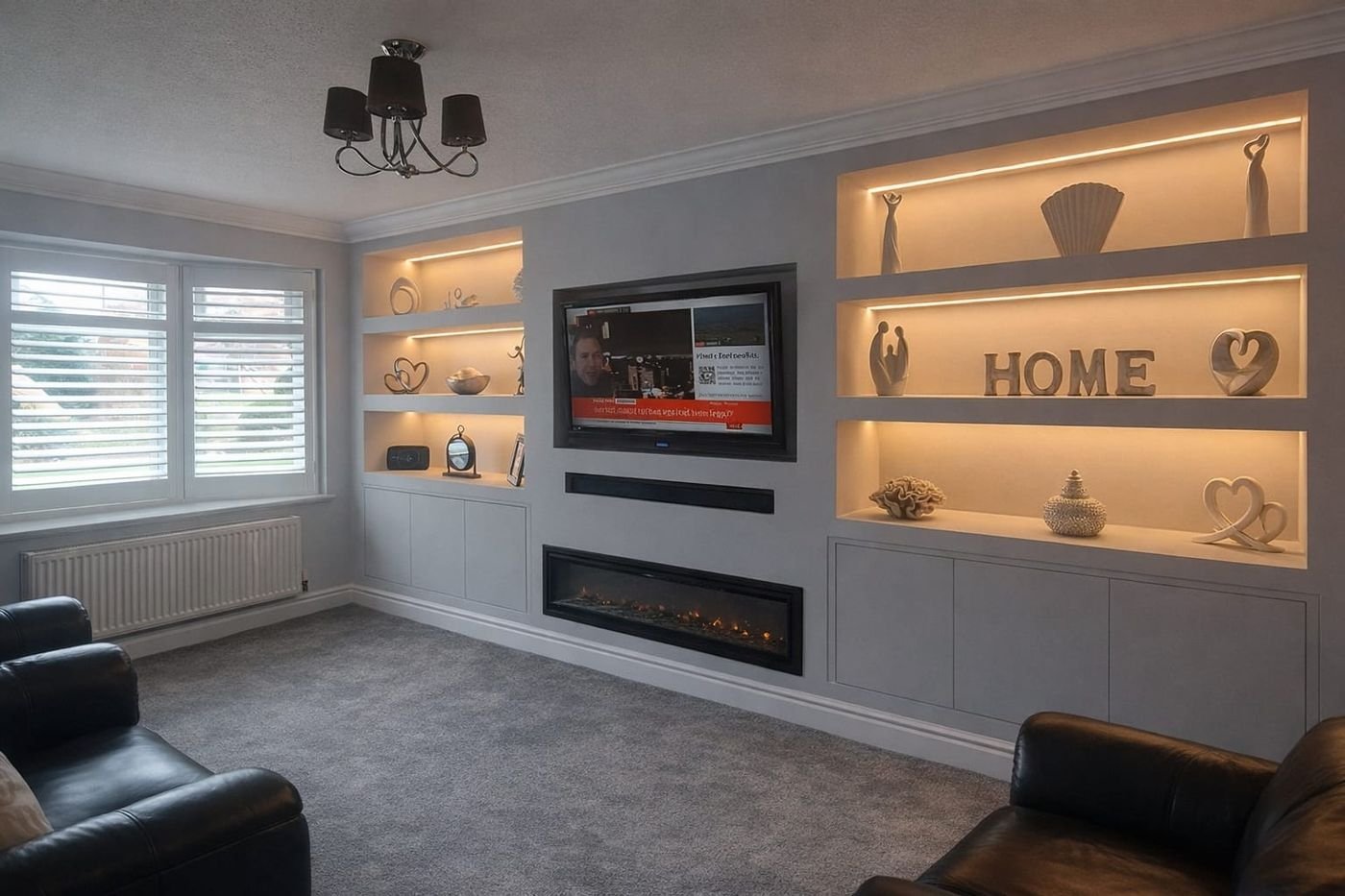
1. Lit Display Niches Either Side of the TV
Open niches either side of a recessed screen give the wall its shape and a place for ornaments, books and photos. LED strip set into the top of each niche lights the shelf below. This is the most requested media wall design, because it works on almost any wall wider than 2.4 metres.
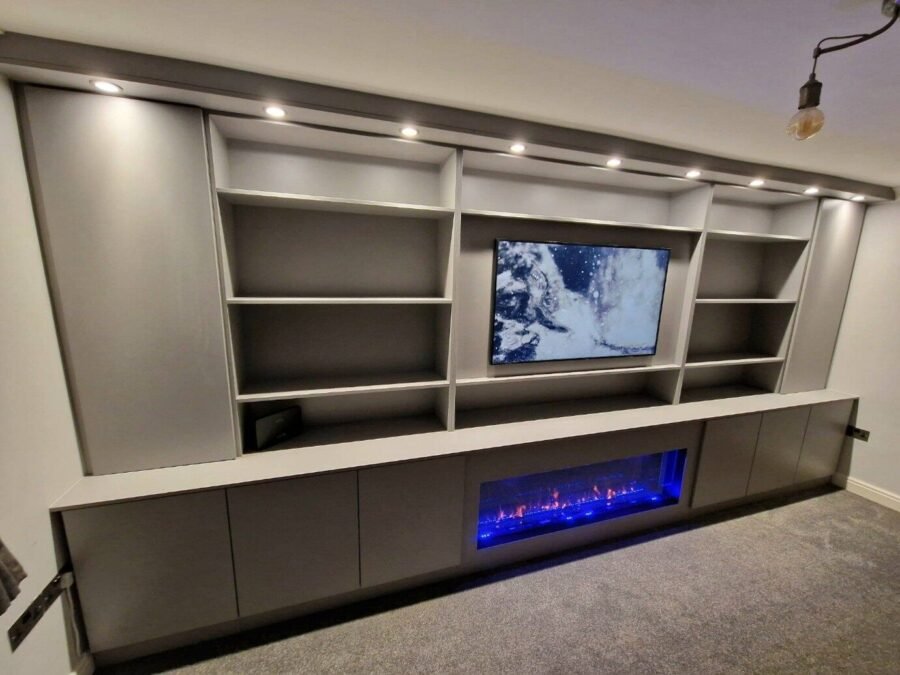
2. An Inset Electric Fire Below the Screen
An electric fire set into the wall below the TV adds a focal point and real warmth without a flue. Our guide to a media wall with fireplace covers fire sizes, heat gaps and safety. Fires are built in at the design stage, because the opening has to match the exact model and its ventilation. The screen then sits higher, so the fire and TV are planned together rather than one after the other.
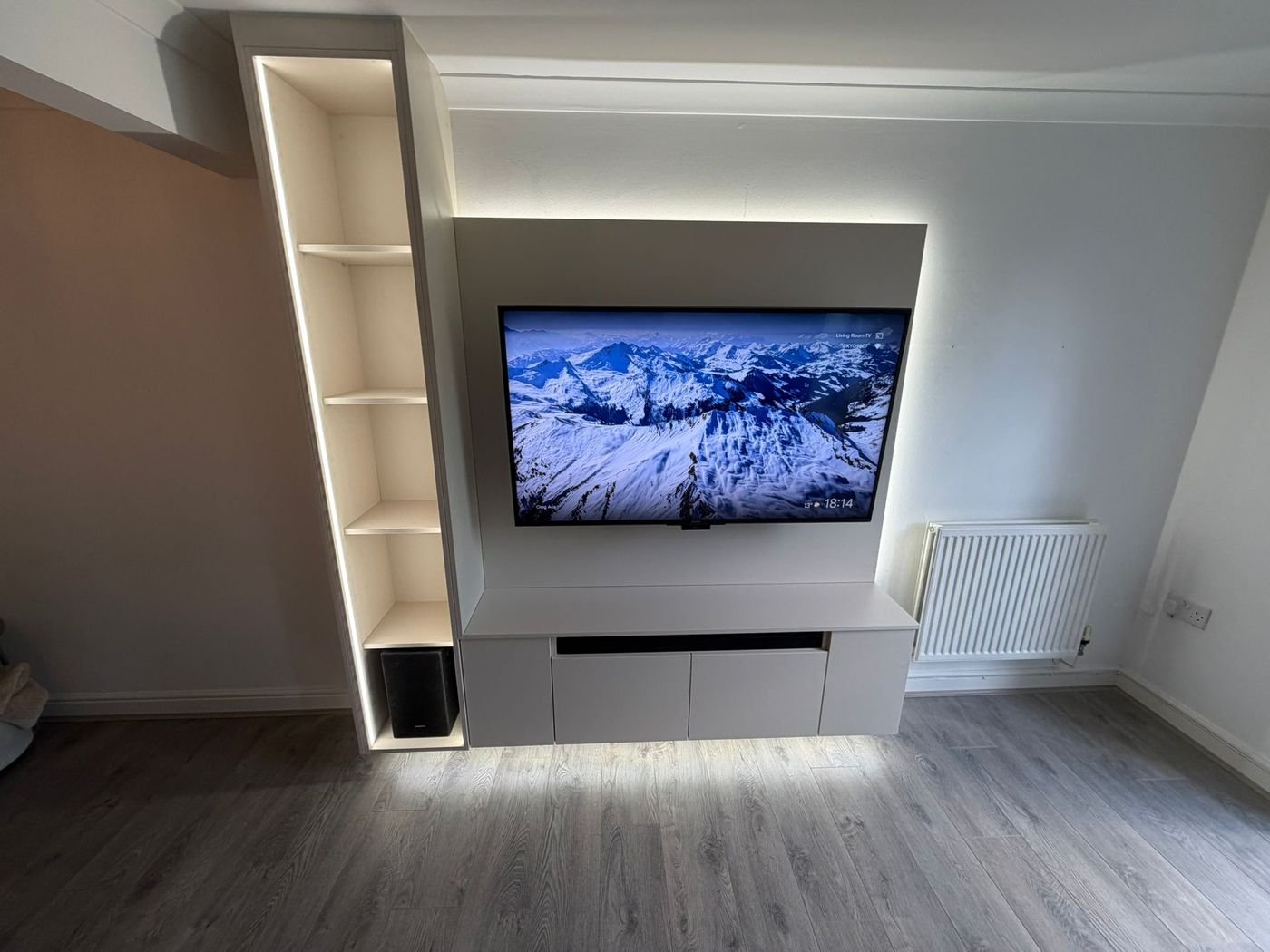
3. A Floating Panel With Backlighting
A single raised panel, with the TV mounted flush and LED strip around the edge, gives a clean modern look in less depth. Panels like this are usually 100mm to 150mm deep, which suits narrow living rooms where every centimetre of floor counts.
4. Slatted or Panelled Backdrop
Vertical slats or shaker-style panelling behind the screen add texture and hide the edges of the TV recess. Slats suit contemporary rooms. Panelling suits period homes, where it echoes the skirting and doors already in the room.
5. A Full-Height Bookcase Wall
Shelving that runs floor to ceiling around the screen turns the media wall into a library wall. Shelves at 280mm to 300mm deep take most hardbacks. Closed cupboards along the bottom keep consoles and cables out of sight.
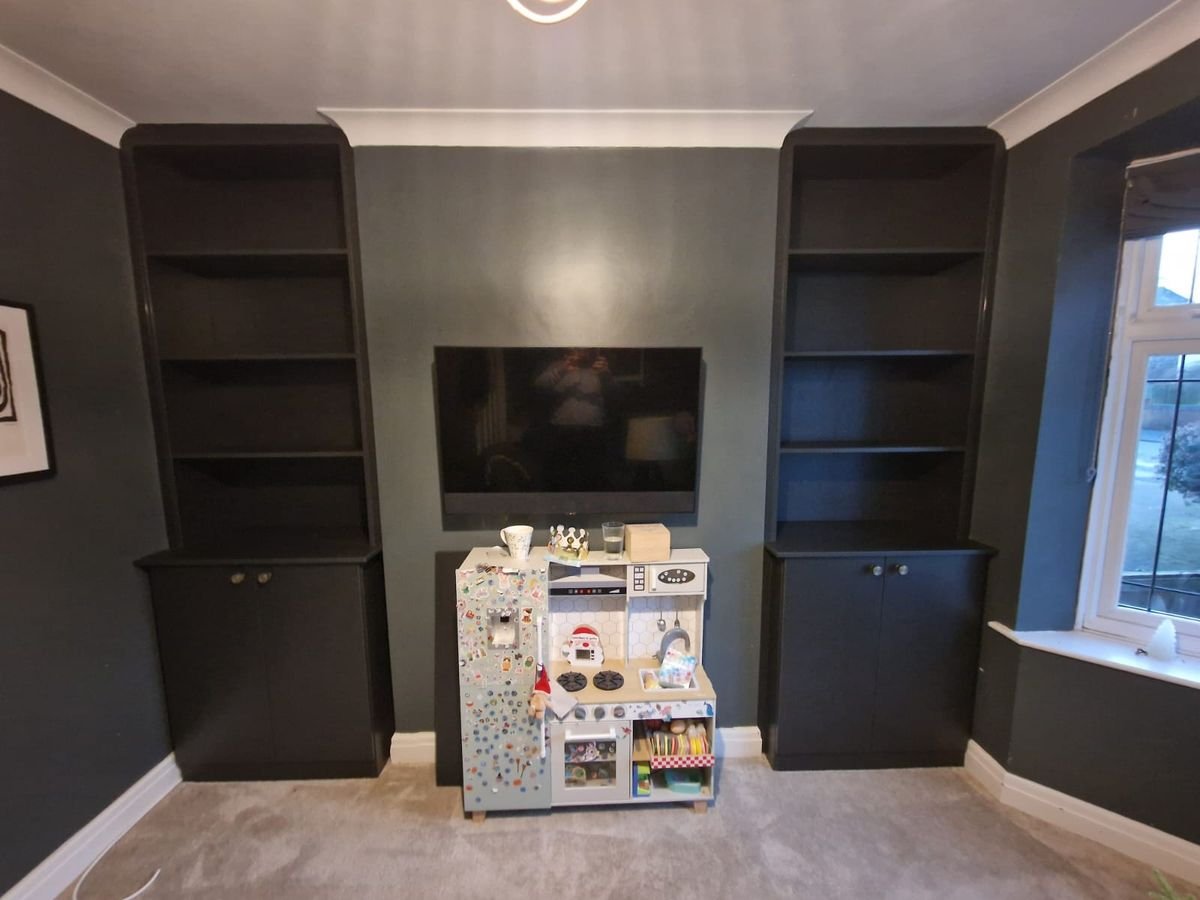
6. Dark Painted Alcove Cabinets
Cabinets painted the same deep colour as the walls make the TV recede when it is switched off. This works particularly well in rooms used for films, and in period rooms with two chimney alcoves, where the cabinets fill each alcove and the screen sits between them.
7. A Corner Media Wall
Where the only free wall is broken by a door or a window, a corner unit angles the screen towards the seating. The cabinetry wraps both walls, so the storage is not lost to the angle.
8. Built Around a Chimney Breast
A chimney breast already gives the depth a media wall needs. The screen goes on the breast, cabinetry fills both alcoves, and an existing fireplace opening can take an electric fire. Our guide to alcove cabinetry explains why the two alcoves are almost never the same size.
9. A Bedroom Media Wall
A slim media wall facing the bed holds the TV, hides the cables and adds drawers or shelving. Bedroom versions are usually shallower than living room ones and often run into fitted bedroom furniture along the same wall.
10. A Gaming and Console Wall
Consoles produce more heat than a TV box, so a gaming wall needs ventilated cupboards and easy access to the ports. Colour-changing LED behind the screen is popular here, with a separate warm white setting for everyday use.
What Height Is Best for a TV on a Media Wall?
The centre of the screen sits at roughly seated eye level, which is about 100cm to 110cm from the floor for most sofas. Measure your own sofa: sit down, look straight ahead, and measure from the floor to your eyes.
An inset fire below the TV pushes the screen higher. When that happens, the screen is set at the lowest height the fire allows, and the seating distance is checked so nobody is looking up for a whole film.
What Size TV Suits Your Room?
A comfortable viewing distance is roughly 1.2 to 1.6 times the screen’s diagonal size. Measure from where your eyes will be on the sofa to the wall.
| Screen size | Comfortable seating distance |
|---|---|
| 55 inch | 1.7m to 2.2m |
| 65 inch | 2.0m to 2.6m |
| 75 inch | 2.3m to 3.0m |
| 85 inch | 2.6m to 3.5m |
The recess is sized for the TV you own now, with tolerance around it. Screens get replaced every few years, so we also run spare conduit, which means a larger TV later does not mean rebuilding the wall.
How Deep Is a Media Wall?
Most media walls are 150mm to 300mm deep where the TV and fire sit, and floating panels can be as slim as 100mm. Depth comes from three things: the TV recess, the fire the manufacturer specifies, and the cupboards below.
The rest of the wall does not need to match. Building shallow at the edges and deeper only in the middle keeps the room feeling as big as it was before.
Which Lighting Works Best on a Media Wall?
Warm white LED at 2,700K to 3,000K, on a dimmer, suits most living rooms. It lights the shelves without the blue tint of cooler strips.
- Niche lighting: LED set into the top of each shelf space.
- Backlighting: strip around the TV or panel edge, which reduces eye strain in a dark room.
- Plinth lighting: a low strip under the cupboards that doubles as a night light.
- Colour-changing: RGB strip for gaming rooms, with a warm white setting for every day.
All lighting is wired at the build stage. See our furniture extras page for the lighting and fittings we add.
Which Finishes Suit a Media Wall?
A painted finish, matched to the wall colour or one shade off it, is the most popular choice, because it makes the media wall look like part of the house. Other options include wood-effect doors, real veneer, slatted panels and handleless push-to-open cupboards.
We bring samples on the design visit so you can see each finish in your own light, next to your own flooring.
From Bare Wall to Media Wall: A Real Project
The three photos below show one of our media walls at each stage.
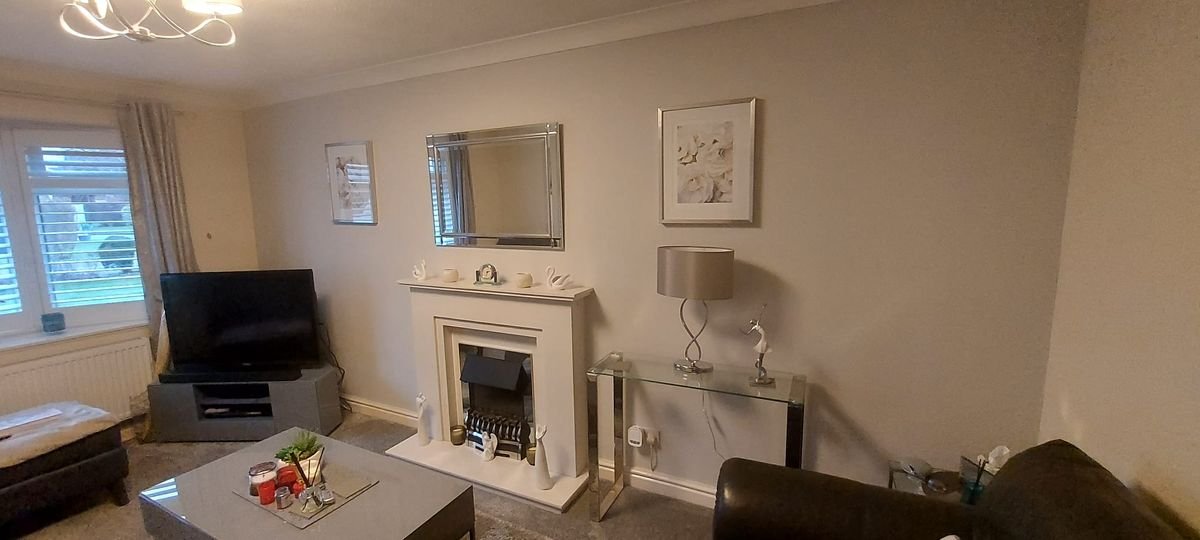
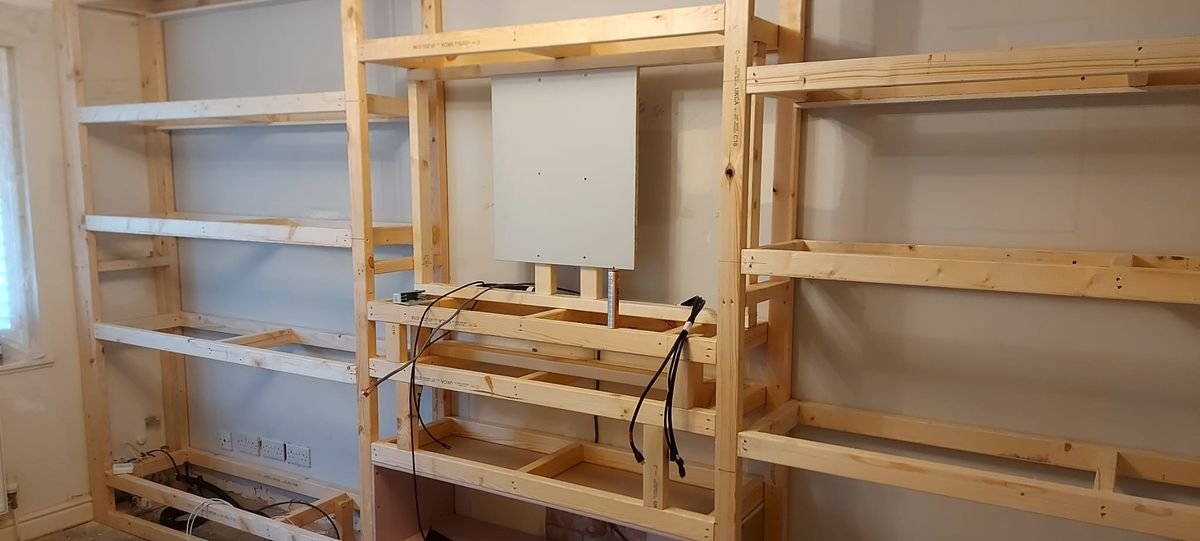
- Survey: the wall is measured and the TV, fire and equipment are listed.
- Design: 3D drawings show the wall in your room before anything is made.
- Frame and first fix: the structure goes up and sockets and cables are positioned.
- Boarding and fitting: panels, shelves, doors and the fire go in.
- Finishing: filling, painting, lighting and a final check with the TV in place.
Common Questions About Media Wall Ideas
Can a media wall go on any wall?
Most walls take one. Solid brick, block and stud walls all work, as long as the frame is fixed properly for that wall type. Walls with a window, a door or a radiator need the design to work around them, which is checked on the design visit.
Can a TV go above an electric fire?
Yes, as long as the fire is chosen and positioned to suit. Each fire has a clearance stated by its manufacturer between the heat outlet and anything above it, and the screen is set to respect that figure.
Do media walls work in small living rooms?
Yes. A floating panel or a shallow unit uses 100mm to 150mm of depth and frees the floor space a TV stand takes. In a small room that usually makes the room feel larger, not smaller.
How long does a media wall take to fit?
Most media walls are fitted within one to a few days on site once the design is signed off. Painting and decorating can add time, depending on the finish.
Where to Start
Start with the wall, the TV you own and where everyone sits. Then see the media walls we design and fit, browse more of our living room furniture, or book a free design visit. We measure the wall, bring finish samples and show you 3D designs before you commit to anything.